
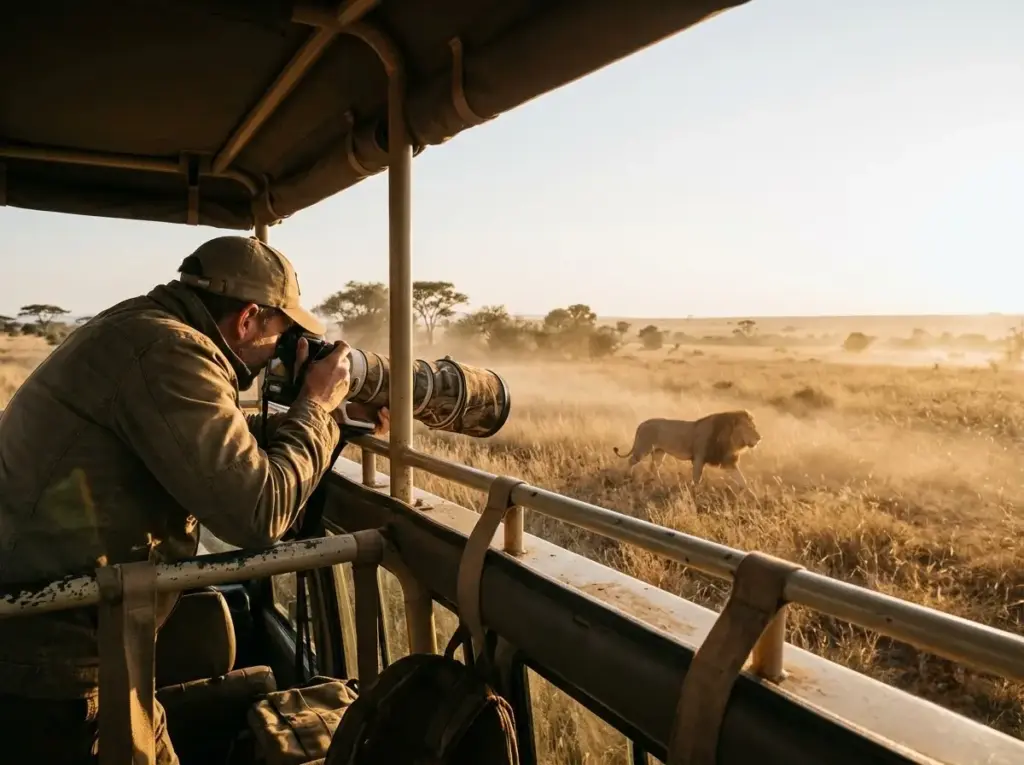
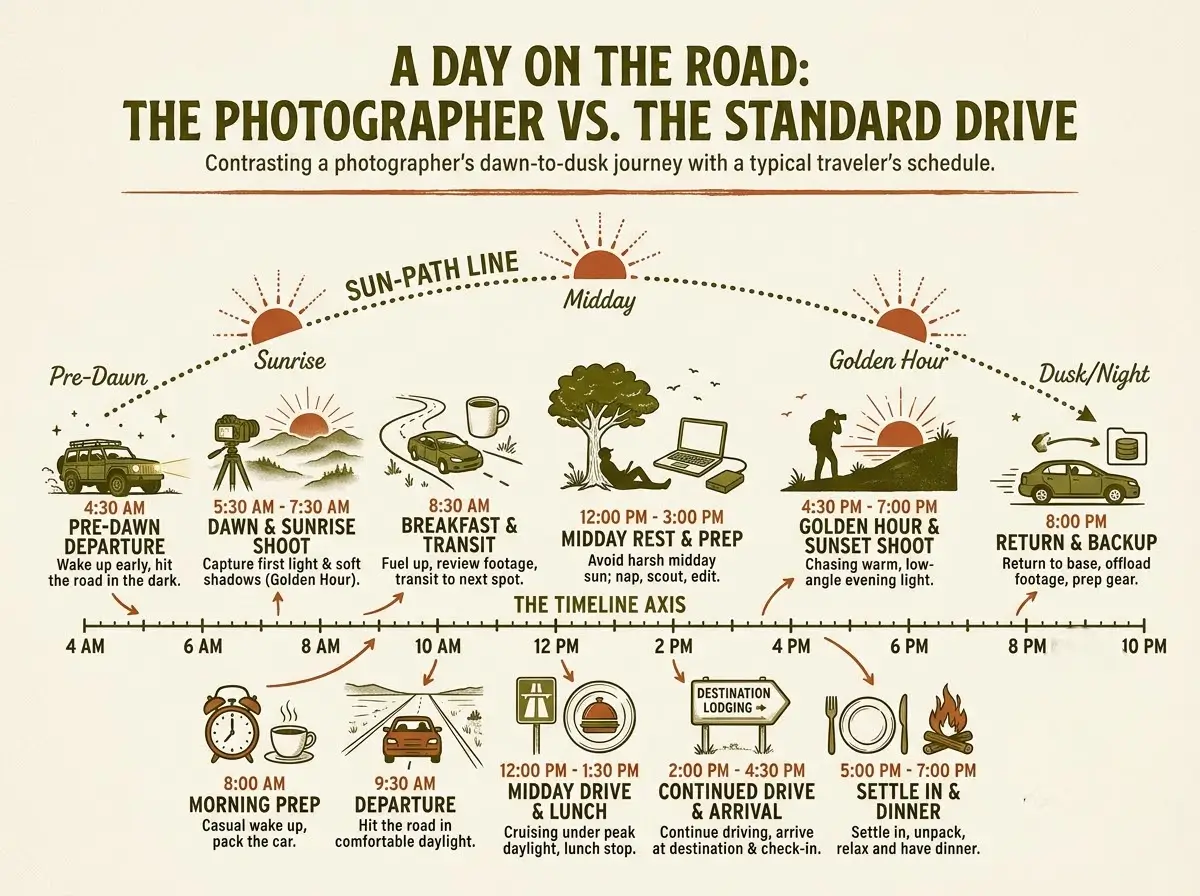
A standard safari schedule and a photography-focused one share the same destinations but run on different clocks. A typical game drive is built around finding wildlife. A photography drive is built around finding wildlife in the right light, from the right angle, with enough time to wait for the shot rather than move on once the sighting is confirmed. A 7-day Kenya safari itinerary built for photographers needs to account for that from the start.
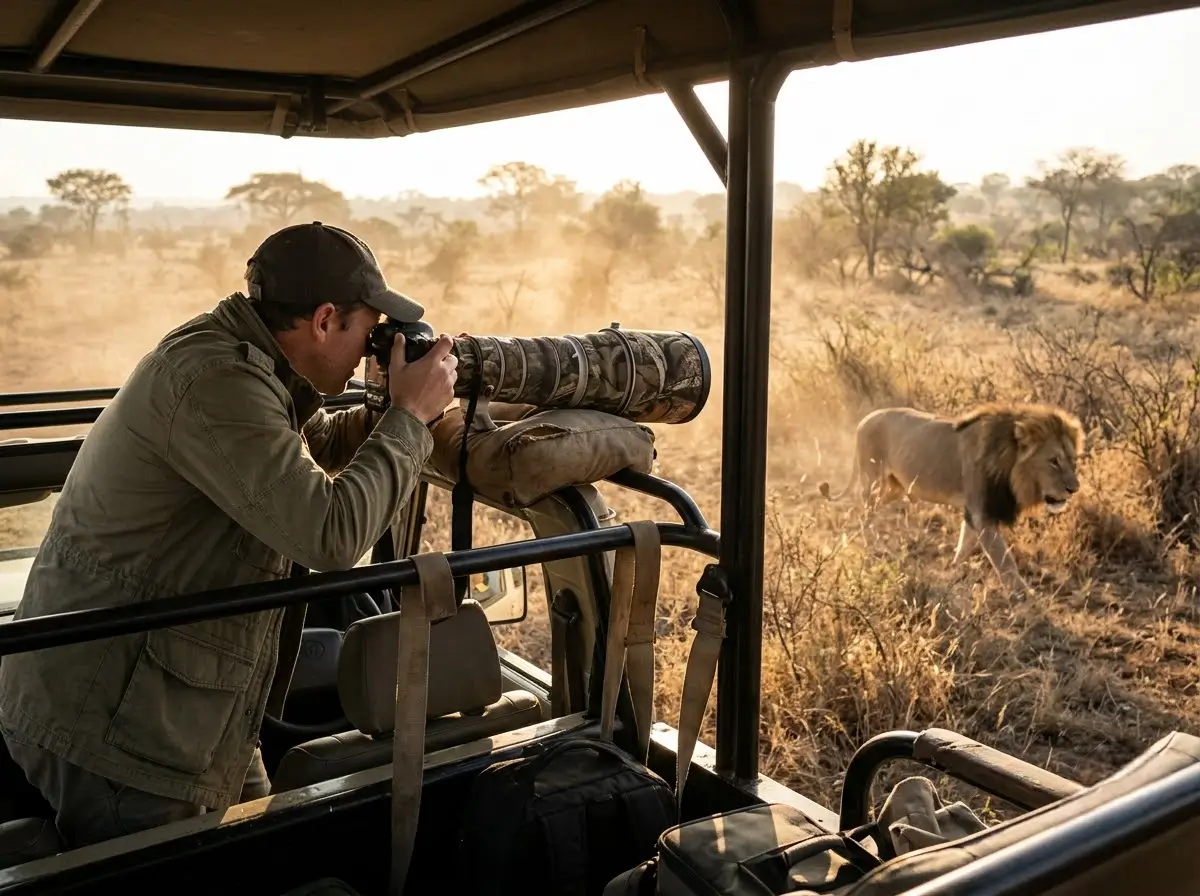
What Changes When Photography Is the Priority
| Element | Standard Safari Drive | Photography-Focused Drive |
|---|---|---|
| Timing | Flexible departure, standard hours | Early starts and extended golden-hour sessions timed for light |
| Pace at a sighting | Move on once the sighting is confirmed | Wait and reposition for composition, not just confirmation |
| Vehicle positioning | General best-available view | Positioned for light direction and background |
| Destination choice | Balanced across general interest | Weighted toward locations with strong visual character |
| Guide role | Wildlife spotting and safety | Spotting plus composition and light awareness |
A Photography-Weighted 7-Day Structure
We use the same three-destination backbone (Amboseli, Lake Naivasha and the Masai Mara), reshaped around photographic opportunity:
- Days 1 to 2, Amboseli. The elephant-herds-against-Kilimanjaro composition is one of Kenya's most photographed scenes for good reason, and it rewards patience. Waiting for the mountain to clear of cloud, or for herds to move into a cleaner line against the horizon, is worth the extra time here.
- Day 3, Lake Naivasha. A sunset boat safari offers a different kind of shot: African Fish Eagles in flight over water, in light a standard game drive can't replicate. If time permits, the walking safari on Crescent Island also allows ground-level compositions with giraffes and zebras that aren't possible from a vehicle.
- Days 4 to 7, Masai Mara. The longest stretch, deliberately. Dry-season conditions (low grass and dry bush) improve visibility for predator photography, and multiple days allow you to return to productive locations at different times of day rather than making a single pass.
Why Dry Season Matters Specifically for Photography
Low grass and dry bush make it much easier to spot lions, leopards and rhinos. For photography, that visibility translates directly into cleaner compositions, since subjects aren't half-obscured by vegetation. Animals gathering around remaining waterholes in the dry months also creates predictable, repeatable shooting locations, which matters when you want to return to a productive spot at a different time of day for different light.
Why Trip Length Matters More for Photography Than for General Travel
Seven days gives a photographer multiple attempts at the same subject under different conditions, which a shorter trip can't offer. A single pass through a location might deliver an average shot. Returning across several days, at different times, with changing light and animal positioning, is how a strong shot actually happens. It's part of why our own Mara stays run three nights rather than one. Repetition is part of the process, not a luxury.
The Role of a Photography-Literate Guide
A guide who understands composition and light, not just where the wildlife is, changes how a photography-focused week plays out. Positioning a vehicle for the right angle, anticipating where light will fall in twenty minutes, and knowing when to wait rather than move on all come from real photography experience, not general guiding knowledge. It matters enough that you should ask directly whether your guide has photography-specific experience before booking a trip built around it.
FAQ: Kenya Safari Itinerary 7 Days for Photographers
How is a photography-focused safari itinerary different from a standard one?
It's built around light timing, patience at sightings and vehicle positioning for composition, rather than confirming a sighting and moving to the next one.
Why does dry season matter more for photography specifically?
Low grass and dry bush improve visibility, giving cleaner compositions without wildlife obscured by vegetation, and waterhole concentration creates predictable, repeatable shooting locations.
Is 7 days enough time for a serious photography trip?
Yes, if it's weighted toward fewer destinations with more days at each. Repeated visits to the same locations under different light usually produce better results than a single pass through many places.
Does the guide's photography knowledge actually matter, or is any experienced guide sufficient?
It matters a lot for serious photography trips. Positioning for light and composition is a different skill from general wildlife spotting, so confirm your guide's photography background before booking.
Should a photography-focused trip include non-wildlife activities like the Lake Naivasha boat safari?
Yes. It offers different lighting and composition opportunities (water, birds in flight) that a standard game drive can't replicate, which helps build a varied portfolio.
The Short Version
A Kenya safari itinerary for 7 days built for photographers runs on a different rhythm: earlier starts, more patience at each sighting, and destinations weighted toward strong visual opportunity rather than general interest. Amboseli, Lake Naivasha and an extended Masai Mara stay, guided by someone who understands light and composition, makes the most of a focused week.
Plan a Photography Kenya Safari Itinerary 7 Days
Tell us your kit, your experience and the shots you're after, and we'll build the week around light and patience.
Get Your Free Quote Call +254 742 801 843Plan a photography-focused 7-day Kenya safari with Frame The Wild Moments, or reach us at [email protected] / +254 742 801 843.






