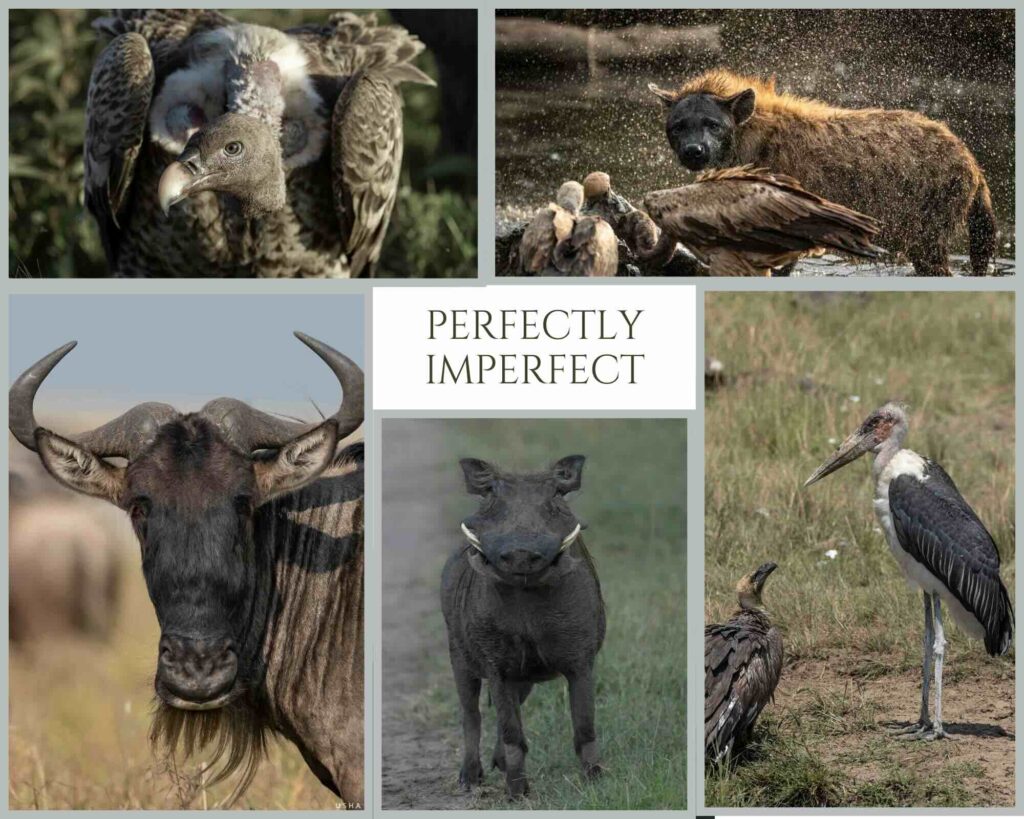
Everyone knows the Big Five (Lion, Leopard, Rhino, Elephant, and Buffalo), but have you heard of the Ugly Five? These animals are celebrated for being “unconventionally” attractive yet vital to the ecosystem:
- Warthog
- Hyena
- Marabou Stork
- Vulture
- Wildebeest
While the Big Five get all the magazine covers and ‘superstar’ status, Kenya’s “Ugly Five” are the true unsung heroes of the savanna. They might not win a beauty pageant, but without them, the ecosystem would effectively collapse.
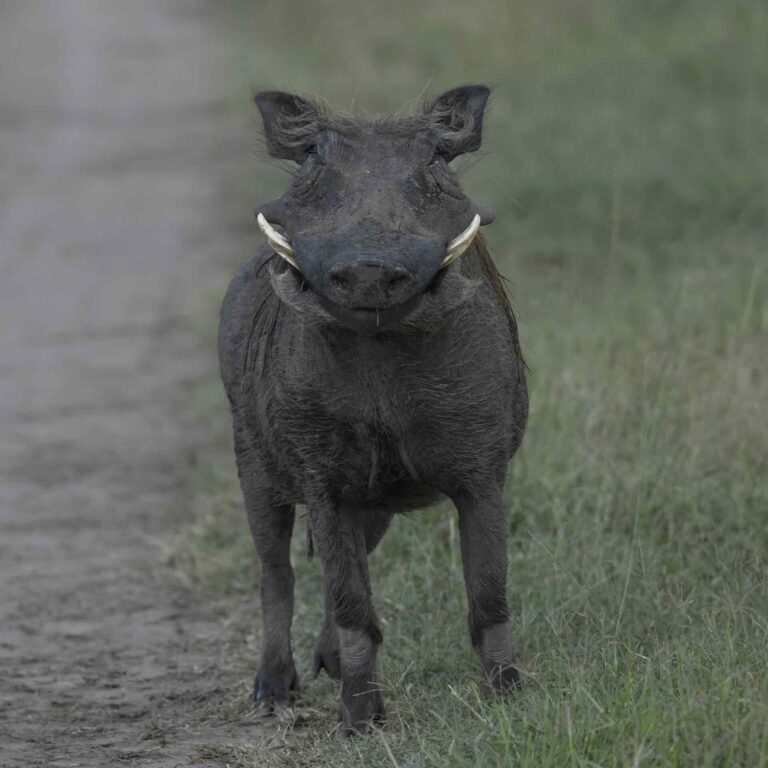
The Warthog: The Savanna’s "Gardeners"
Often seen trotting through the grass with their tails held high like radio antennas, warthogs are the comedians of the wild.
- The Look: Protruding tusks, sparse hair, and those famous facial “warts” (which are actually thick pads of skin to protect them during fights).
- The Skill: They are incredibly resourceful. They often “kneel” on their front joints to graze on short grass.
- Why they matter: By digging for bulbs and roots, they aerate the soil, helping new plants grow.
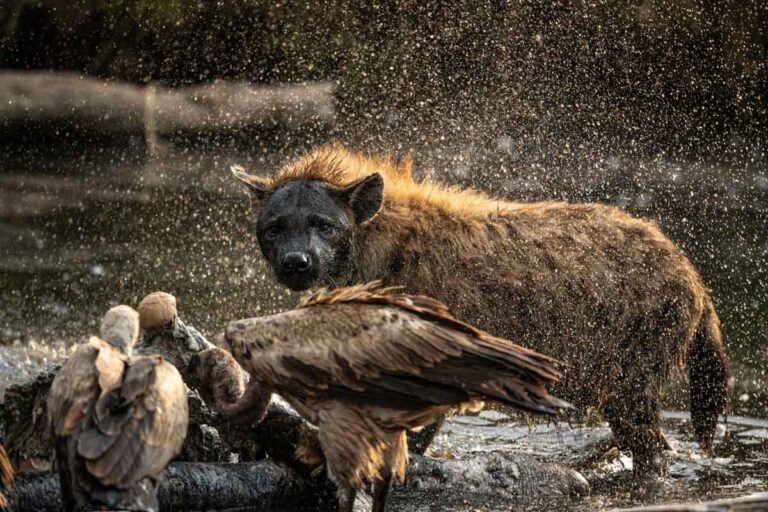
The Spotted Hyena: The Misunderstood Genius
Forget the “villain” reputation from movies; hyenas are some of the most intelligent and social mammals in Kenya.
- The Look: Sloping backs, powerful necks, and a “laugh” that can be heard for miles.
- The Skill: They have one of the strongest bite forces in the animal kingdom, capable of crushing buffalo bones.
- Why they matter: They are the savanna’s cleanup crew. By eating almost every part of a carcass—including bones and hooves—they prevent the spread of diseases and keep the environment clean.
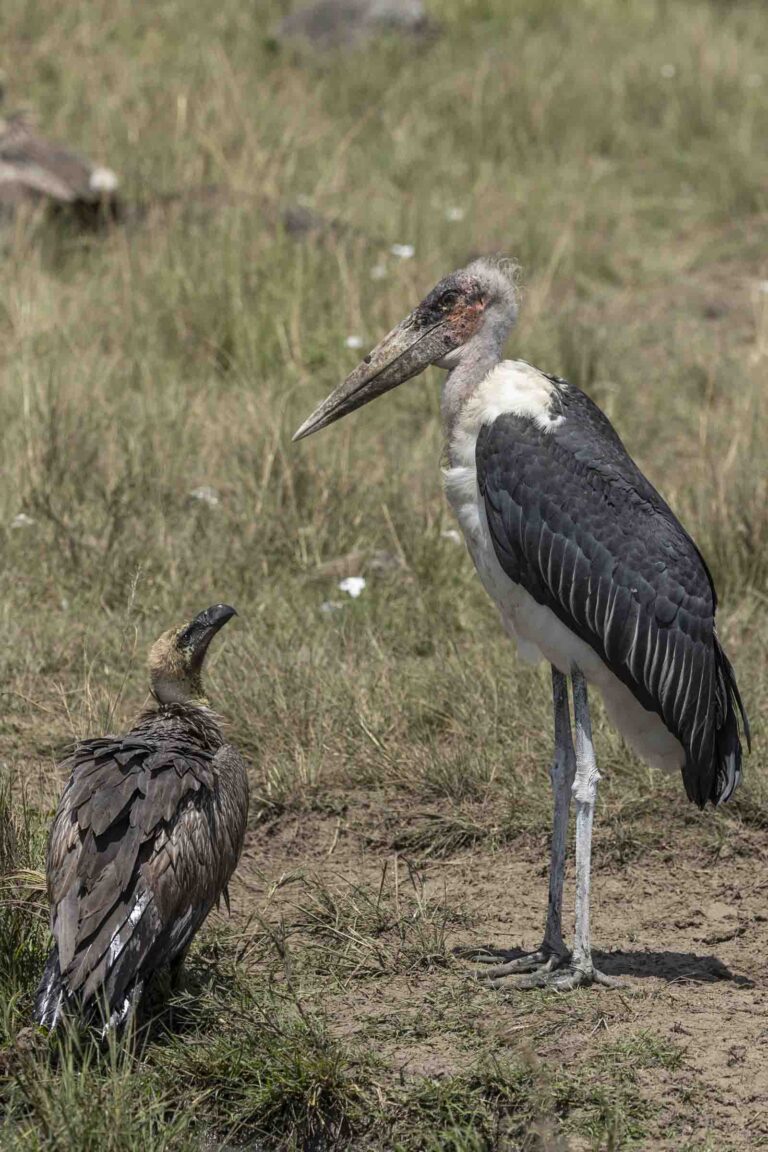
The Marabou Stork: The "Undertaker"
Commonly found hanging around Nairobi’s trees or near kill sites, the Marabou Stork looks like a grumpy old man in a suit.
- The Look: A massive wingspan, a bald, scabrous head, and a fleshy pink throat sac used for social displays.
- The Skill: They are incredibly patient, waiting for larger predators to finish their meal before stepping in.
- Why they matter: Along with vultures, they act as nature’s waste management system, processing decaying organic matter that other animals won’t touch.
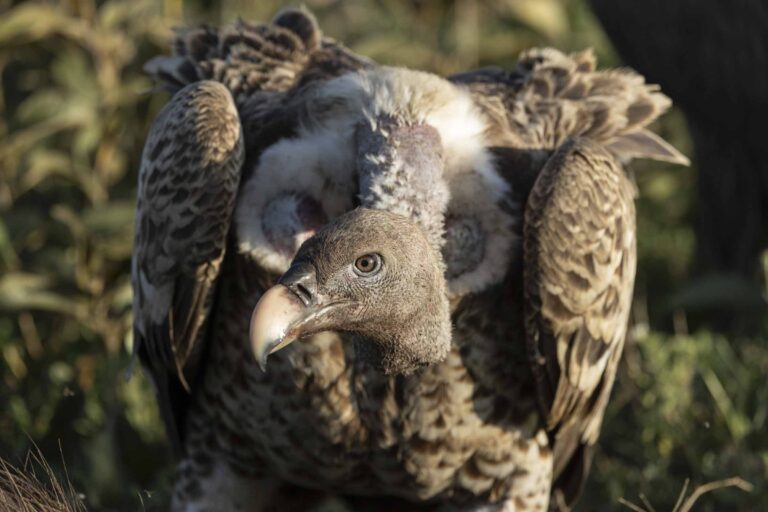
The Vulture: The High-Flying Health Inspectors
In Kenya, we have several species, including the Lappet-faced and White-backed vultures.
- The Look: Hunched shoulders and featherless heads (this is actually a hygiene feature—it’s easier to keep a bald head clean when sticking it inside a carcass!).
- The Skill: Their stomach acid is highly corrosive, allowing them to digest anthrax, cholera, and botulism toxins that would kill other animals.
- Why they matter: Without vultures, carcasses would rot longer, leading to outbreaks of rabies and other deadly diseases.
The Wildebeest: The "Spare Parts" Animal
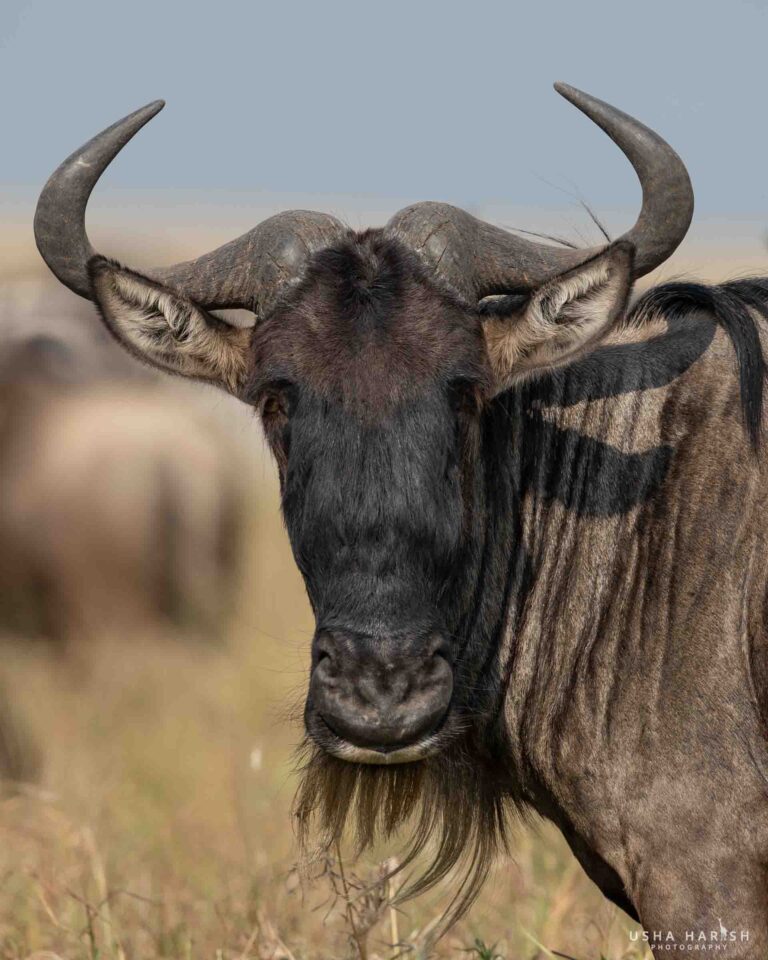
Legend has it that the wildebeest was made from the “leftover parts” of other animals: the head of an ox, the mane of a horse, and the tail of a zebra.
- The Look: A lanky, awkward build that seems to always be in a state of confusion.
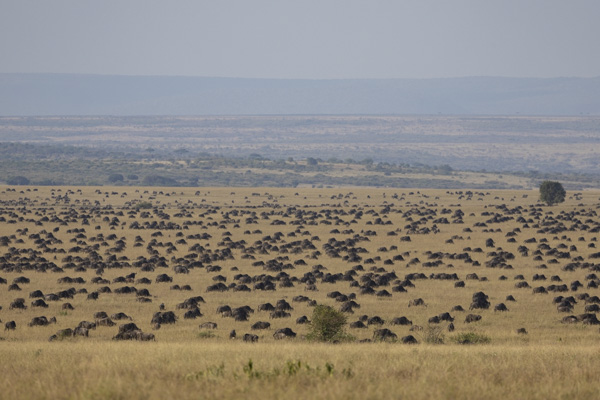
- The Skill: They participate in the Great Migration, one of the most spectacular natural events on Earth, moving in the millions between the Serengeti and the Maasai Mara.
- Why they matter: Their constant movement and grazing keep the grasslands healthy, and they provide a vital food source for almost every predator in Kenya.
Fun Safari Tip: Next time you’re in the Mara or Amboseli, ask your guide to help you “collect” the Ugly Five. It’s often more challenging and rewarding than just spotting the Big Five!
By Usha Harish