
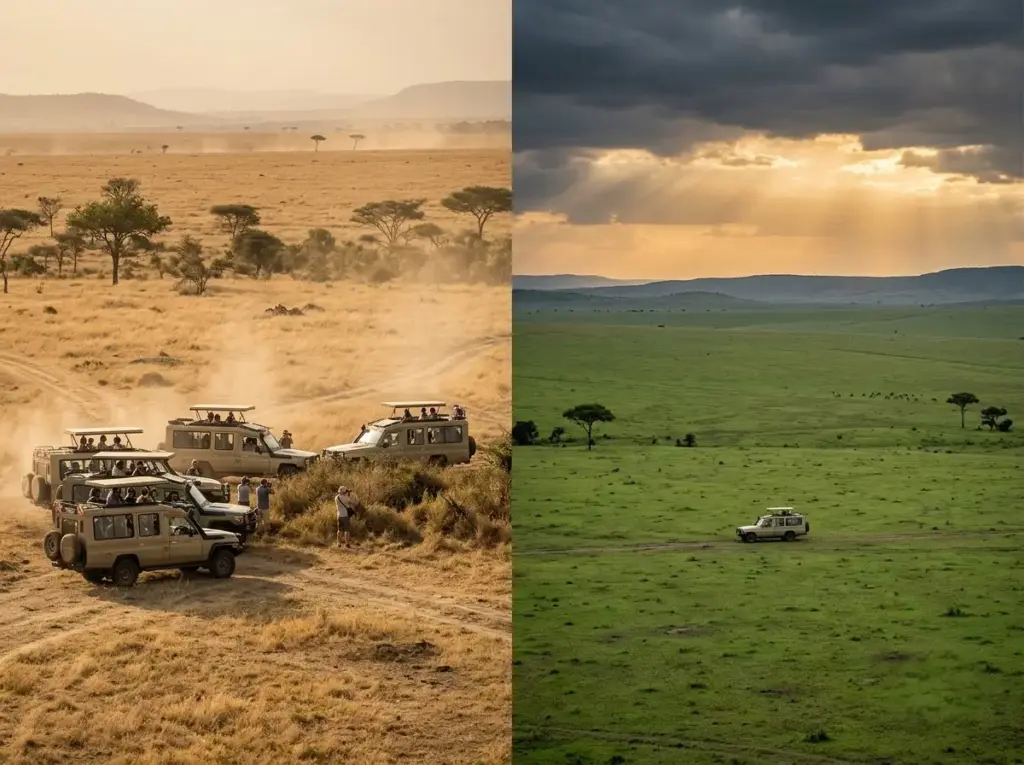
Most "best time to visit" content quietly assumes everyone wants the same thing: the migration, the crossings, the famous July to September window. That's a fair assumption for a lot of travellers, but not all of them. Some people are optimising for fewer crowds, better value or a quieter, more personal experience, and the migration isn't their priority. This is the honest version of that comparison, for anyone working out the best time to visit Masai Mara.
What "Peak" and "Shoulder" Actually Mean in the Mara
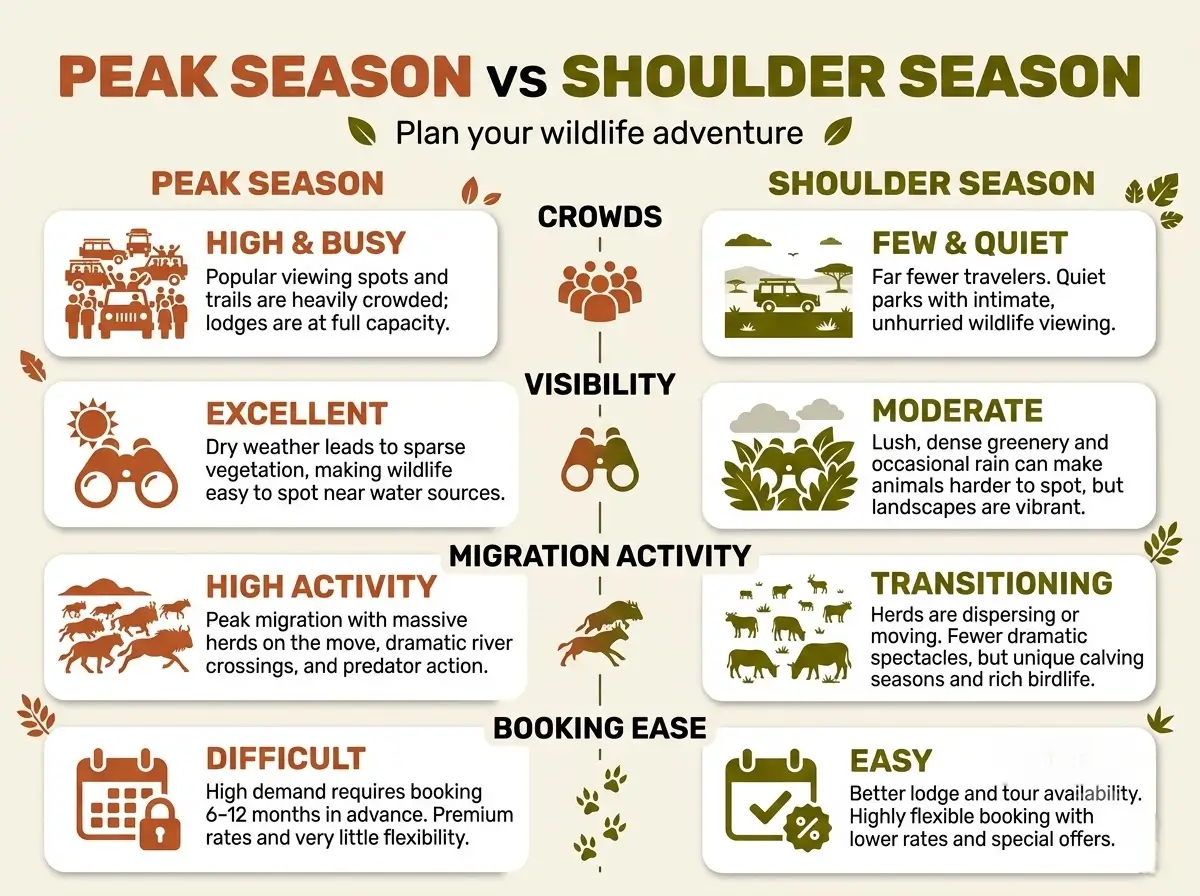
| What You Compare | Peak Season (July to September) | Shoulder Season (Surrounding Months) |
|---|---|---|
| Visibility | Excellent: low grass, dry bush, waterhole concentration | Still strong just outside peak; more variable in rainy months |
| Migration activity | At its highest, with river crossings concentrated in this window | Herds arriving or departing depending on exact timing |
| Camp availability | Books out fastest, often needs early reservation | Easier to secure, more flexibility on dates |
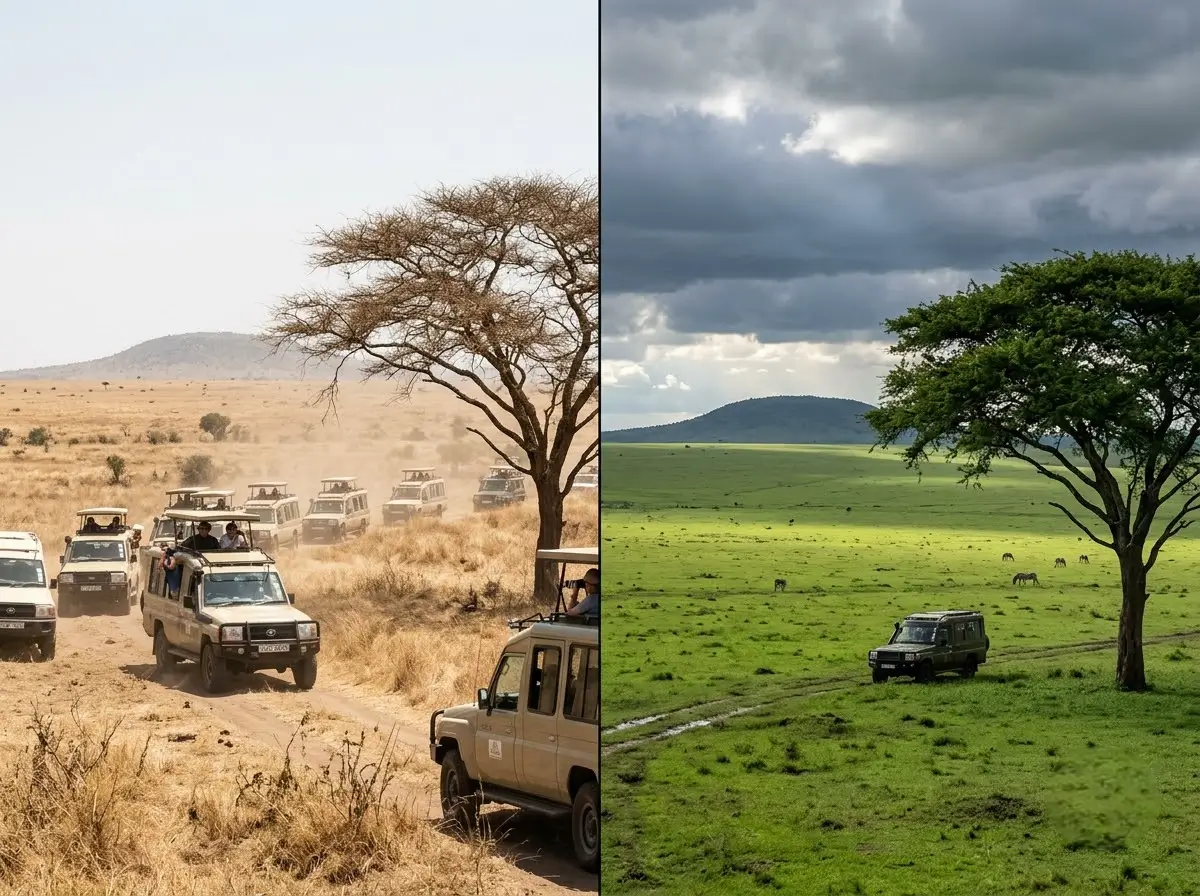
| Crowd levels | Busiest time in the Mara | Noticeably quieter, more personal experience |
| Landscape | Dry, golden, open | Greener in rainy months, dramatic skies |
The Case for Peak Season
If the Great Migration river crossings are the reason you're going, peak season isn't really optional. July to September is the window where that spectacle happens, full stop. Dry-season visibility is also at its strongest, with low grass and dry bush making predators easier to spot and wildlife concentrating around the remaining waterholes. For a first Masai Mara trip, or one built around witnessing the migration, this is the season to plan around.
The Case for Shoulder Season
What peak season doesn't advertise as loudly: it's also the busiest time in the Mara, with camps booking out early and more vehicles sharing the same sightings. Shoulder season trades some of the migration spectacle for a quieter experience, with fewer vehicles at each sighting, more flexibility on dates and often a calmer pace. If crowd levels and a more personal feel matter more to you than guaranteeing a crossing, this is a legitimate choice, not a consolation prize.
Questions That Actually Help You Decide
Rather than defaulting to "everyone says July to September", be honest about what you're prioritising:
- Is witnessing a river crossing a must-have? If it is, peak season is the right call. If strong general game viewing would satisfy you, you have more options.
- How much does crowd density affect your experience? If sharing a sighting with several other vehicles would really bother you, shoulder season deserves serious consideration.
- How flexible are your travel dates? Peak season requires booking well ahead; shoulder season generally offers more last-minute flexibility.
- Is this a once-in-a-lifetime trip, or do you expect to return? First-time visitors often lean toward peak season for the full spectacle. Returning visitors sometimes prefer shoulder season for a different kind of trip.
It Doesn't Have to Be All-or-Nothing
The dry-season visibility advantage, with easier spotting thanks to low grass and waterhole concentration, extends somewhat into the months bordering the absolute peak, not just the three headline months. A trip timed just before or after the core July to September window can still deliver strong game viewing with more breathing room on camp availability and crowd levels, a middle ground between the two extremes above.
FAQ: Peak vs. Shoulder Season in Masai Mara
Is peak season always the better choice?
Not necessarily. It's the better choice if witnessing the river crossings is your priority. If a quieter, more personal experience matters more, shoulder season is a strong alternative.
Does shoulder season mean poor wildlife visibility?
No. Visibility remains strong in the months just outside peak season, since the dry-season advantage isn't limited to exactly three months.
How much earlier do I need to book for peak season versus shoulder season?
Peak season camps, including ours at Mara Siligi, fill up fastest and need to be booked well in advance. Shoulder season generally offers more flexibility and a shorter planning runway.
Is shoulder season cheaper?
Camp pricing and availability vary by season, so discuss specific dates with your safari planner, since figures shift year to year.
Can I get a good migration experience outside the exact July to September window?
It's possible, depending on exact herd movement timing, but the odds are much better within the July to September peak if the migration is your focus.
The Short Version
The best time to visit Masai Mara isn't a single universal answer. Peak season (July to September) delivers the migration spectacle and strongest visibility but comes with crowds and early booking pressure, while shoulder season trades some of that for a quieter, more flexible trip. Knowing which trade-off matters to you is the real decision, not picking the most hyped month.
Find the Best Time to Visit Masai Mara for You
Peak or shoulder, we'll help you choose the season that fits your priorities, dates and budget.
Get Your Free Quote Call +254 742 801 843Talk to Frame The Wild Moments about which season fits your priorities, or reach us at [email protected] / +254 742 801 843.






