
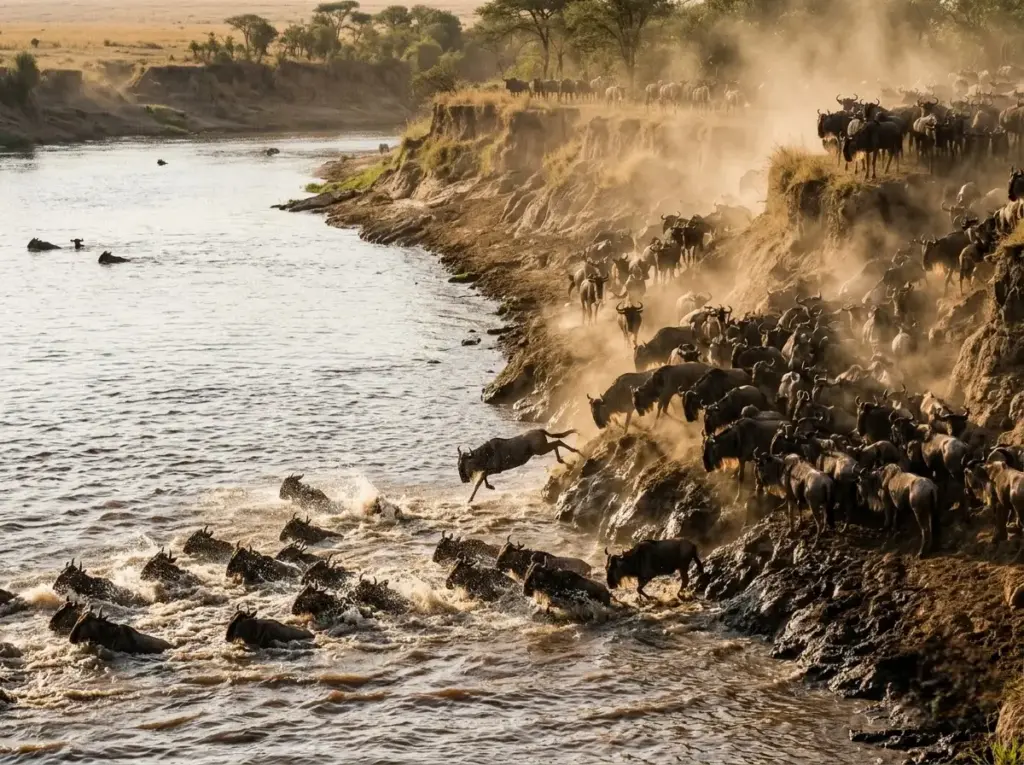
The river crossing is the single image most people have in their head before they've even booked a Masai Mara safari: the chaos, the dust, the herd committing to the water all at once. It's also the part of the trip people worry most about getting "wrong", afraid they'll arrive a week too early or too late and miss it entirely. Here's what matters when working out the best time to visit Masai Mara for the crossings.
The Window That Matters Most
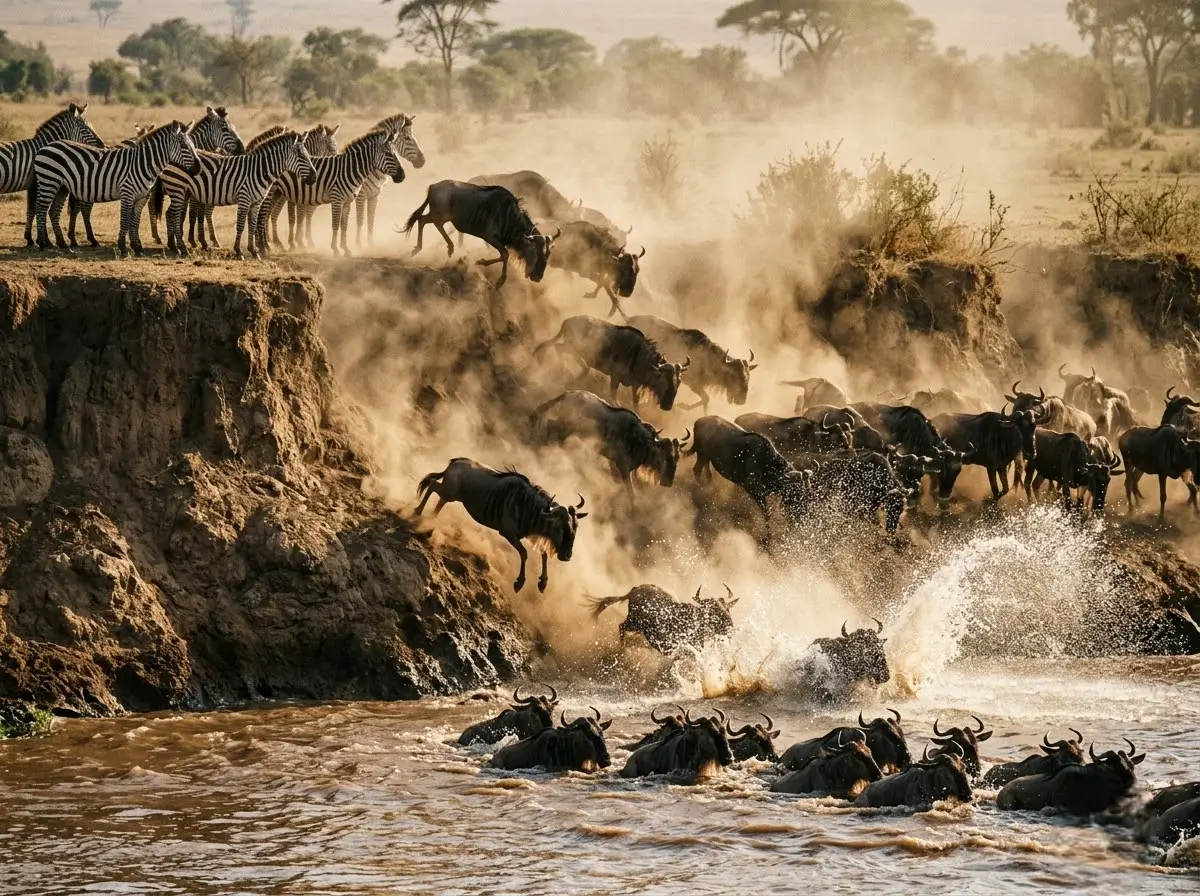
July to September is the peak for the Great Migration river crossings in the Masai Mara. Within that window there's real movement and unpredictability. Crossings aren't scheduled events. They happen when the herds decide to move, driven by grazing conditions and water availability rather than a calendar. Across the season as a whole, though, this three-month stretch is where crossing activity concentrates.
July in the Mara is unlike any other time of year. You have coffee at camp as the sun paints the plains gold, then head out into a landscape where thousands of wildebeest and zebras are moving as one, the anticipation building before a crossing actually happens.
Why Crossings Aren't a Guaranteed, Bookable Event
No safari operator, anywhere, can promise you'll witness a river crossing on a specific day. The herds move based on their own grazing and water patterns, not a schedule. Timing your trip for July to September puts you in the right window, in the right conditions, with the odds in your favour. It's not a guarantee, but it's a much better chance than visiting outside the season.
| Factor | Why It Affects Your Crossing Chances |
|---|---|
| Trip length | More days in the Mara during peak season means more opportunities to be in the right place |
| Camp location | A camp close to known crossing points means a faster response when activity is reported |
| Time of year within the window | Late July through August often sees heavier crossing activity as herds push north, though this varies year to year |
| Guide experience | Guides who track herd movement daily can position you faster than those working from general knowledge alone |
Peak Window vs Outside the Window
| What You Get | July to September | Outside the Window |
|---|---|---|
| Crossing activity | Most concentrated across the season | Lower odds of witnessing a crossing |
| Game viewing between crossings | At its strongest, thanks to dry-season visibility | Varies with rainfall and water sources |
| Camp availability | Fills quickly, so book early | Generally easier to secure |
| Best for | Travellers for whom a crossing is a priority | Travellers who value quieter camps over migration drama |
Why Camp Location Actually Matters for This
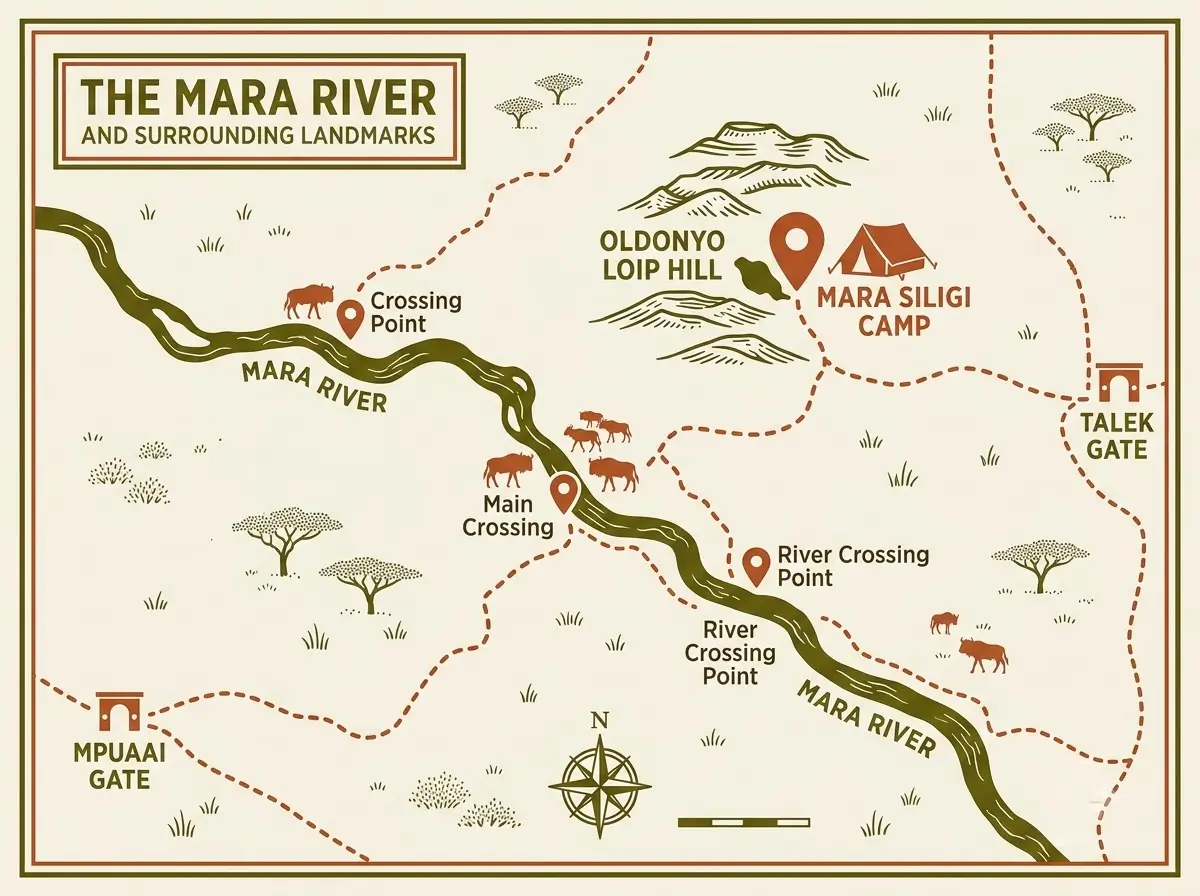
This detail gets glossed over in a lot of generic migration content: where you stay during the migration season affects your odds of witnessing a crossing, not just your comfort. Our own camp, Mara Siligi, sits at the foothills of Oldonyo Loip Hill in a predator-rich corridor just minutes from the Talek and Mpuaai gates. That proximity matters when crossing activity can develop and shift within hours, and a long transfer from camp to crossing point can mean missing the moment entirely.
What Dry-Season Conditions Add to the Experience
Beyond the crossings themselves, the dry-season advantage runs through July to September. Low grass and dry bush make it much easier to spot lions, leopards and rhinos, and animals concentrate around the remaining waterholes. The rest of your game viewing, between crossing attempts, is also at its strongest in this window.
Planning Your Trip Length Around the Migration
A short trip during peak season can still deliver, but more days improve your odds simply by giving you more mornings and afternoons in position when activity happens. If witnessing a crossing is a priority rather than a hope, talk about trip length directly with your safari planner instead of assuming a shorter trip will cover it just because you're visiting in the right months.
FAQ: Timing the Great Migration River Crossings
Is July to September guaranteed to include a river crossing?
No. Crossings depend on herd movement, grazing and water conditions, not a fixed schedule. July to September is the peak window where crossing activity is most concentrated, which improves your odds a lot without being a guarantee.
Does camp location actually affect my chances of seeing a crossing?
Yes. A camp close to known crossing points allows a faster response when activity is reported, which matters because crossings can develop and shift within hours.
Is a longer trip better for witnessing a crossing?
Generally yes. More days in the Mara during peak season means more mornings and afternoons where you could be in position when a crossing happens.
What else is worth seeing during the July to September window besides the crossings?
Dry-season visibility is at its strongest, so general game viewing is excellent. Lions, leopards and rhinos are easier to spot, and wildlife concentrates around remaining waterholes.
How far in advance should I book a trip focused on the river crossings?
As early as possible. Peak-season camps fill quickly, and the proximity advantage of a well-placed camp matters most when you're not competing for the last remaining slots.
The Short Version
The best time to visit Masai Mara for the river crossings is July through September. It's not a guaranteed date, but it's the window where conditions, herd movement and crossing activity consistently line up. Camp proximity and trip length both affect your odds within that window, which is exactly why Mara Siligi Camp sits where it does.
Plan the Best Time to Visit Masai Mara for the River Crossings
Tell us your dates and how much the crossings matter to you. We'll help you plan the right window, trip length and camp.
Get Your Free Quote Call +254 742 801 843Plan your migration safari with Frame The Wild Moments, or reach us at [email protected] / +254 742 801 843.






