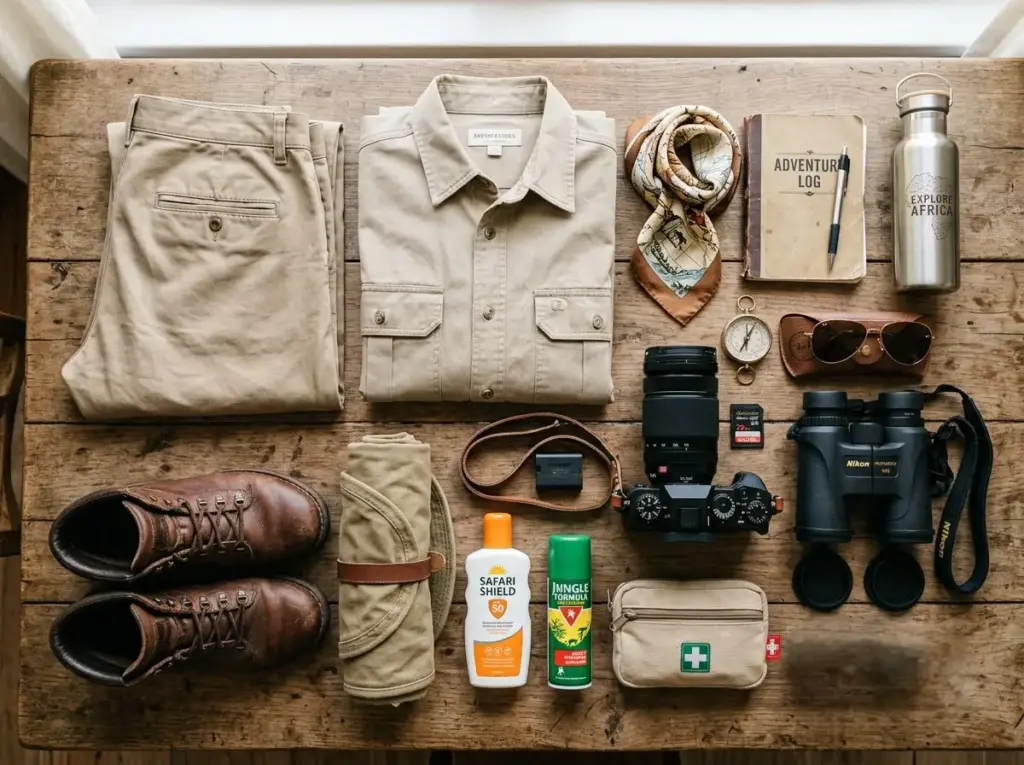
Overpacking for a wildlife safari is one of the most common first-timer mistakes, and it’s an expensive one once you’re paying for excess baggage on a 15kg internal flight. Here’s what actually matters, straight from what operators tell their own guests before departure.
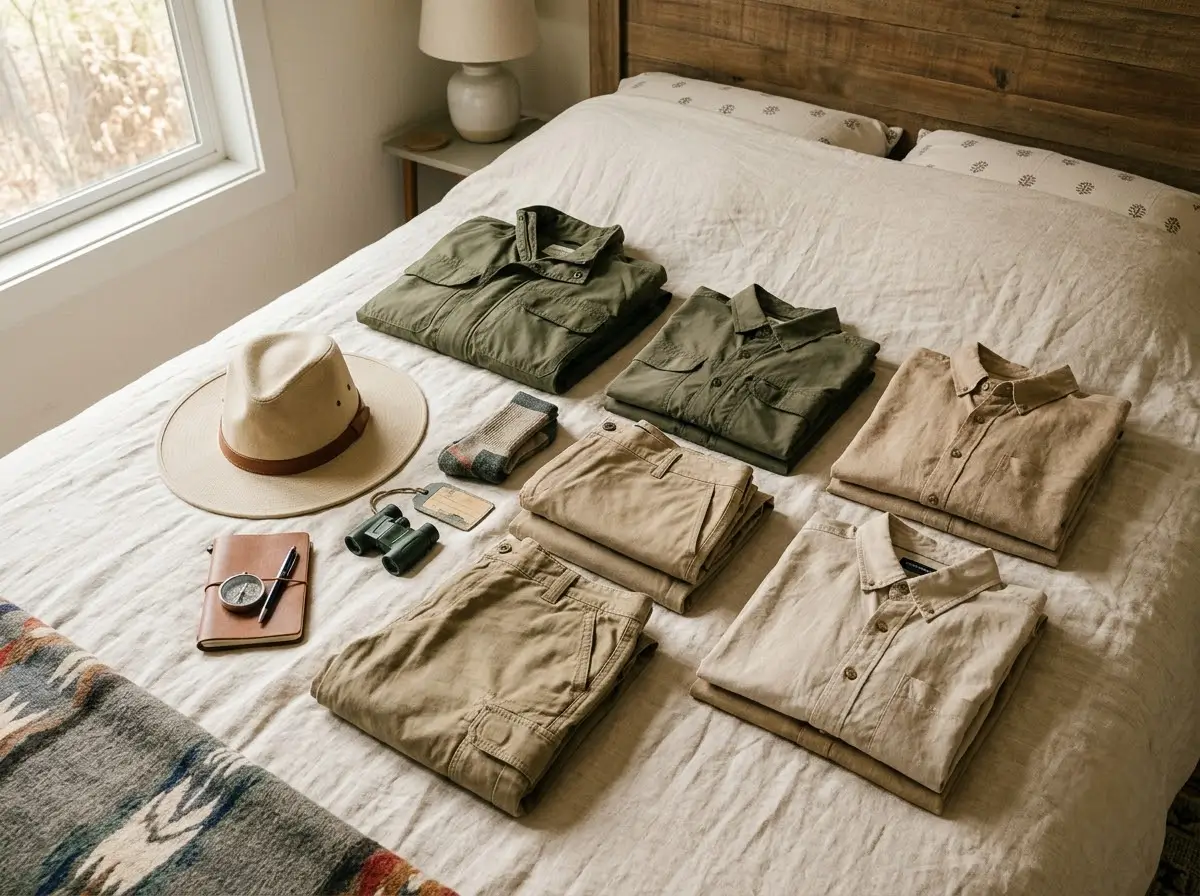
Clothing: colour matters more than you’d think
Stick to khaki, tan, olive, or grey. Blue and black are worth avoiding specifically because they attract tsetse flies, and camouflage-pattern clothing is illegal in Kenya for civilians, not just impractical. Beyond colour, pack in layers — mornings on a game drive are genuinely cold, even though the afternoon sun can be intense:
- 1 warm fleece or jacket for early starts
- 1 windbreaker
- 2–3 long-sleeve shirts
- 2 pairs of lightweight trousers, ideally zip-offs that convert to shorts
- 1 pair of shorts
- 1 pair of closed sneakers or hiking boots, plus sandals for the camp
The gear that actually gets used
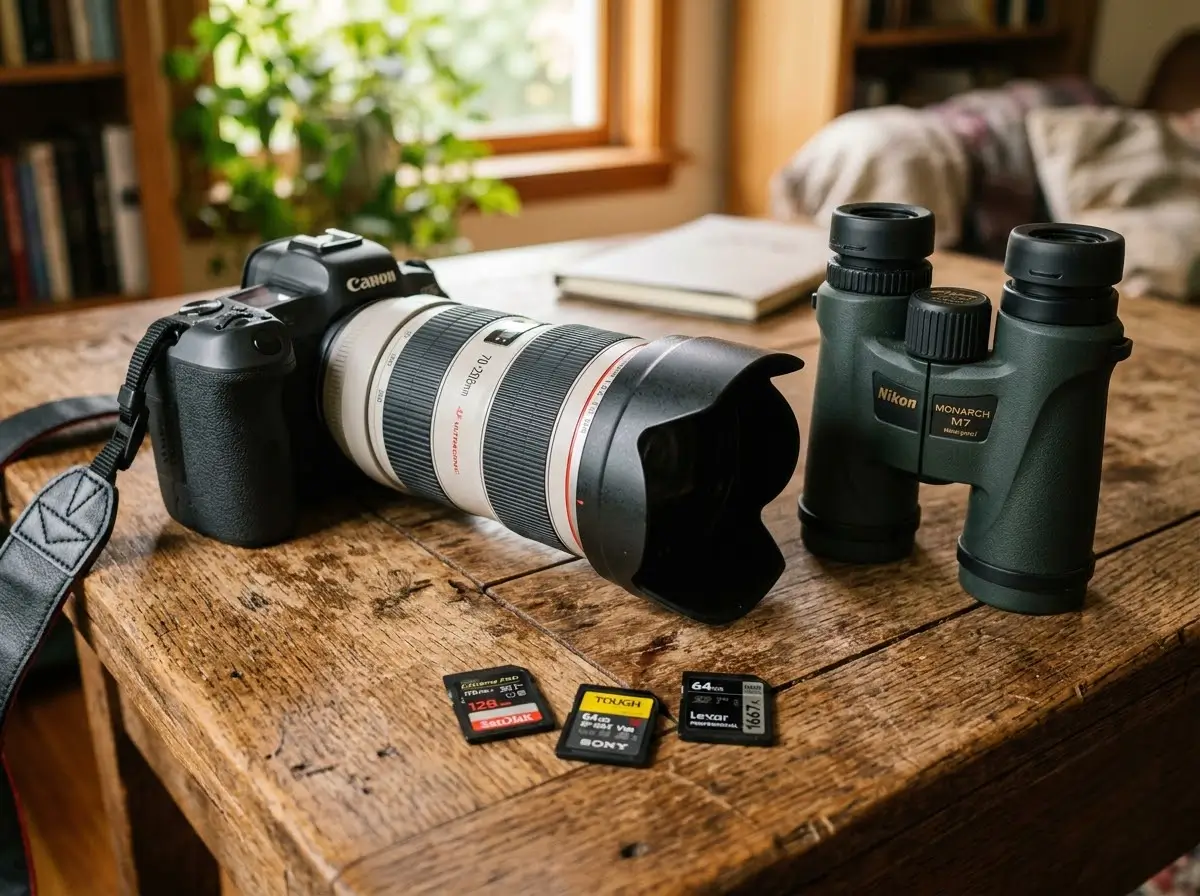
A pair of 8×42 binoculars is the most useful single item most first-timers forget — it’s the all-rounder size for wildlife viewing at safari distances. For photography, a zoom lens of 200mm or more, extra memory cards, and spare batteries matter more than the camera body itself. Bring a Type G plug adapter (the rectangular UK-style pin) and a portable power bank, since many tented camps run on solar power with charging points only in the main lounge rather than in individual tents.
If a Masai Mara photo safari is the plan rather than a general wildlife safari, it’s worth asking your operator what gear their own guides recommend for local light and dust conditions before you buy anything new — a 400mm lens sounds impressive but isn’t always the most practical choice from inside an open vehicle.
Sun, dust, and bugs
- High-SPF sunscreen and polarised sunglasses
- Insect repellent with DEET
- A scarf or “buff” for dust on open-vehicle game drives
- A dry bag specifically for electronics
Laundry and how little you actually need to pack
Most camps, including tented ones, offer laundry service — which means packing for a full two weeks is rarely necessary even on a longer trip. Five or six days’ worth of clothing, washed and turned around within a camp’s usual laundry cycle, comfortably covers most itineraries. This matters more than it sounds, since it directly affects whether you’re within the 15kg internal flight allowance without paying for a freight seat you didn’t need.
Basic first aid worth carrying
Anti-diarrheal medication, malaria prophylaxis (discuss this with a travel clinic before you go), and basic painkillers cover most of what comes up on a trip like this.
What NOT to pack
| Item | Why it’s a problem |
|---|---|
| Plastic bags (including Ziplocs) | Strictly illegal in Kenya — use reusable silicone or cloth bags instead |
| Drones | Prohibited without an expensive, multi-month permit process; unlicensed drones are confiscated and can result in heavy fines |
| Camouflage clothing | Illegal for civilians to wear in Kenya |
| Hard-sided suitcases (for internal flights) | Small bush planes need soft-sided duffel bags — rigid cases often won’t fit the cargo pods |
Baggage limits if you’re flying between parks
Internal flights to reserves like the Masai Mara typically cap baggage at 15kg total, including your checked bag, hand luggage, and camera equipment. Hand luggage is limited to around 5kg of that total. If you know you’ll be over, a freight seat (roughly the price of a child’s ticket) buys an additional 75kg of allowance — worth asking about at the time of booking rather than discovering the limit at the airstrip.
Frequently Asked Questions
Why can’t I wear black or blue on safari?
Both colours attract tsetse flies, which are more than a nuisance — their bite can be genuinely painful and, in some regions, carries disease risk.
Do I really need binoculars if I have a camera with a zoom lens?
Yes — binoculars let you actually watch behaviour and scan the landscape for what to photograph next, which a viewfinder doesn’t do nearly as well.
Can I bring a drone to photograph the Mara from above?
No. Recreational drone use is essentially banned across Kenya’s national parks and reserves, and unlicensed drones are confiscated with heavy fines attached.
What’s the baggage limit if I’m taking a small plane to the reserve?
Usually 15kg total per person, in a soft-sided duffel bag rather than a hard suitcase — check with your operator before you pack.
Planning Your Wildlife Safari Kit List?
Once you know what you’re packing, the next question is where you’re going. Get in touch and we’ll match your wildlife safari to the right camp, season, and pace before you buy a single thing on that list.