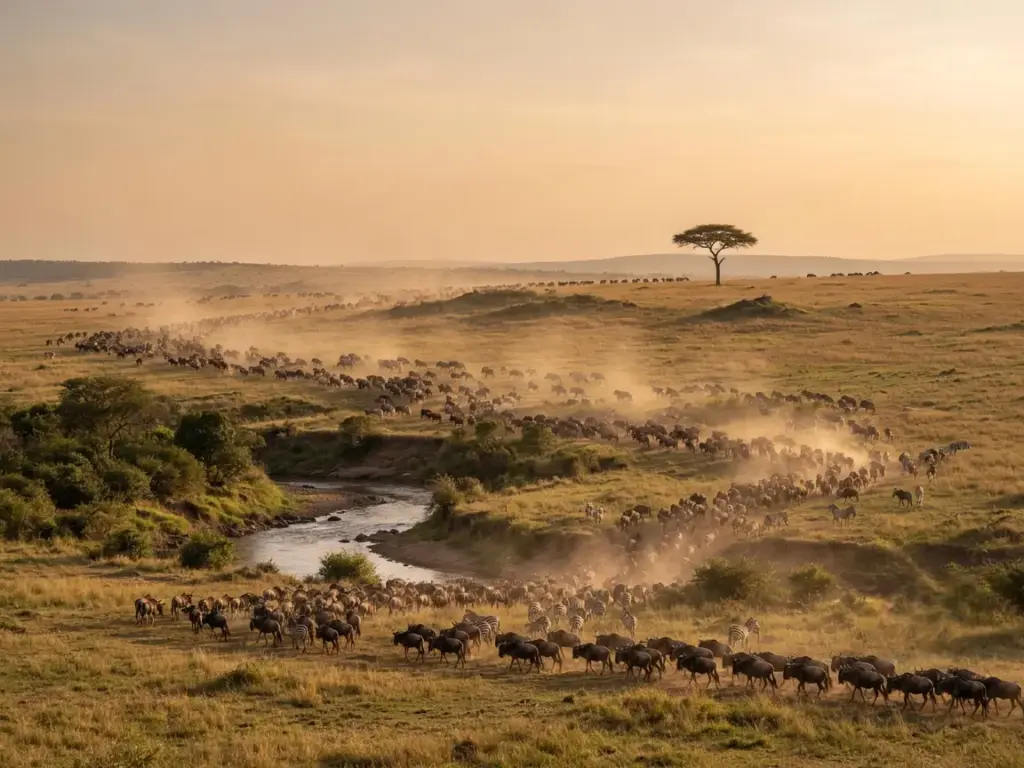
"When should we go?" It's the first question we hear from almost everyone, and the answers online are mostly useless. Most say the Mara is good all year, which is true in the same way that London is good all year. It tells you nothing when you have ten days of leave and a flight to book.
What changes through the year
Rain does most of the work. The reserve sits at around 1,500 metres, so even this close to the equator the days are warm and early game drives are properly cold.
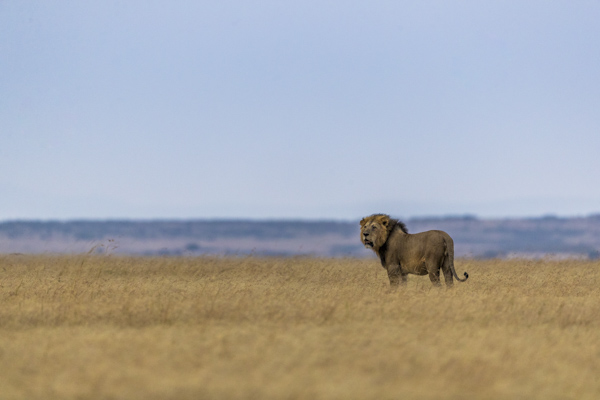
The dry spells run roughly from late June to early October, then again from December to early March. When the grass drops, lions and leopards have less to hide behind, and animals bunch up around the few reliable water sources. After the rains the reserve turns green, water is everywhere, and the wildlife spreads out and gets harder to find. That's why the best time to visit Masai Mara depends on whether you want easy sightings or quiet.
Dry Spells vs Green Season at a Glance
| What You Compare | Dry spells (late June to early October, December to early March) | Green season (April, May and November) |
|---|---|---|
| Grass | Drops, so lions and leopards have less to hide behind | Lush, and the plains look like a different country |
| Water and wildlife | Animals bunch up around the few reliable water sources | Water is everywhere, wildlife spreads out and is harder to find |
| Vehicles | More vehicles, especially in July and August | Most of the vehicles disappear |
| Camp rates | Higher | The lowest of the year |
| Skies | Clear | Huge and moody, which photographers love |
| Best for | Easy sightings | Quiet |
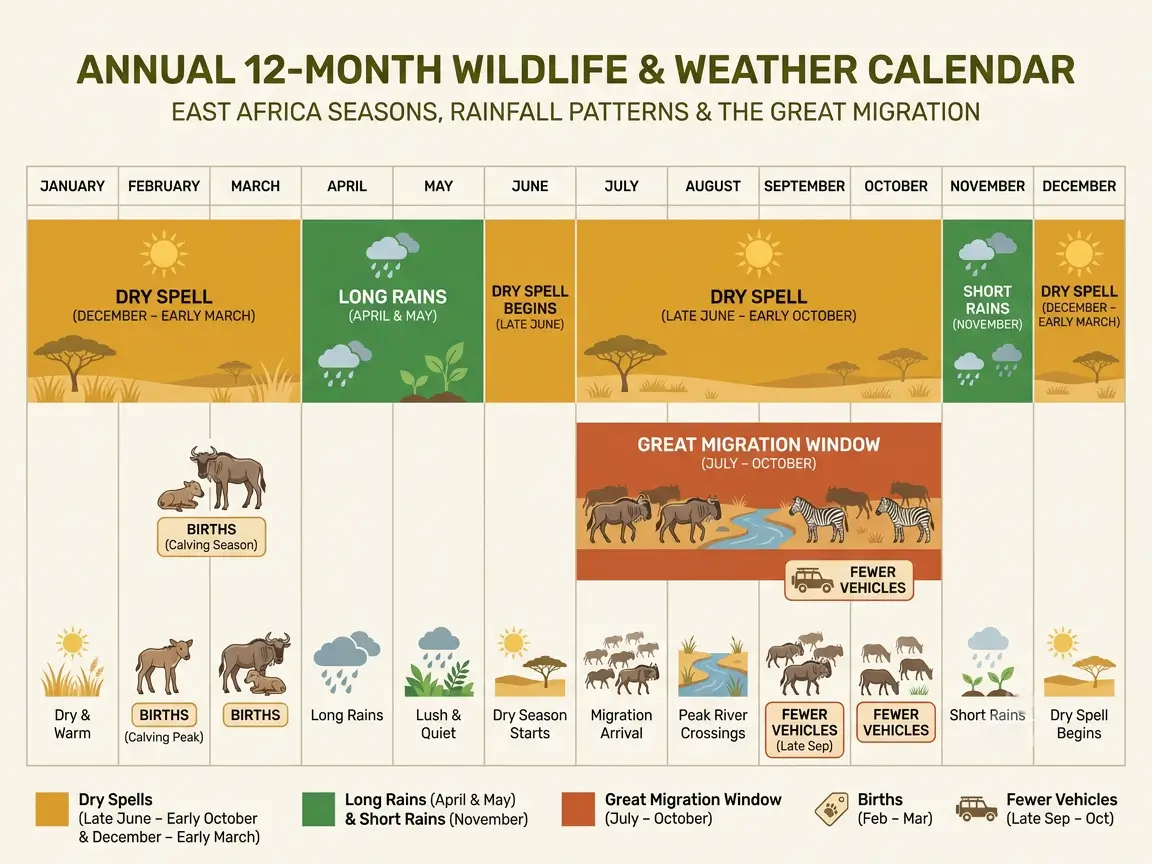
Best time to visit Masai Mara for the Great Migration
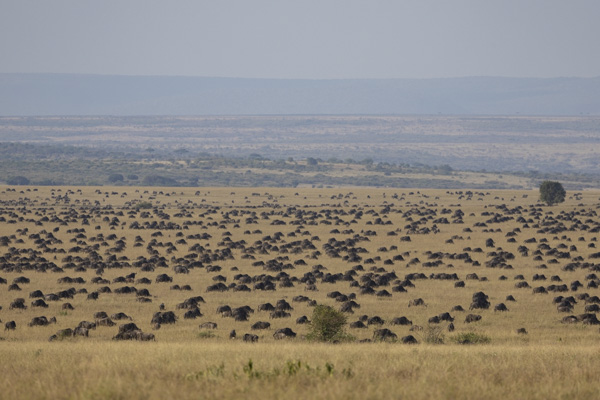
If the river crossings are why you're going, aim for July to October. That's when the herds of wildebeest and zebra move up from the Serengeti and gamble on the Mara River, with crocodiles waiting on the other side.
It's also less predictable than the brochures suggest. The herds follow rain and fresh grass, not the calendar, and operators quote slightly different windows. Some see the first crossings in late June. Others stretch the season into November. Treat the dates as a good probability. Anyone who promises a crossing on a particular afternoon is selling you something.
Why September beats August
July and August are the headline months, and they're also the busiest. A driver quoted by Responsible Travel counted 180 to 200 vehicles waiting at one crossing on a single morning. Vehicles jostle for position, and nervous herds can stand at the water's edge for hours.
Late September and October are usually the better bet. The grass is still short, plenty of animals are around, and the queues thin out. Choosing the best time to visit Masai Mara for crossings without the crowds is the question we get asked more than any other.
There's a practical angle for UK travellers too. August lines up with the school holidays, so flights and camps book up sooner and cost more. September gives you the same dry conditions with a lot more breathing room.
| What You Compare | July and August | Late September and October |
|---|---|---|
| Crowds | The busiest months, with 180 to 200 vehicles counted at one crossing | The queues thin out |
| Grass and animals | Dry conditions | The grass is still short and plenty of animals are around |
| Flights and camps | Book up sooner and cost more | Same dry conditions, with a lot more breathing room |
| Crossings | The headline months | Usually the better bet for crossings without the crowds |
The green season is underrated
April and May bring the long rains and November brings shorter ones, and those months carry the lowest camp rates of the year. Most of the vehicles disappear, and the plains look like a different country. The skies are huge and moody, which photographers love. The trade-off is real, though. Animals are harder to track down, and some travellers fly in rather than put up with slower roads.
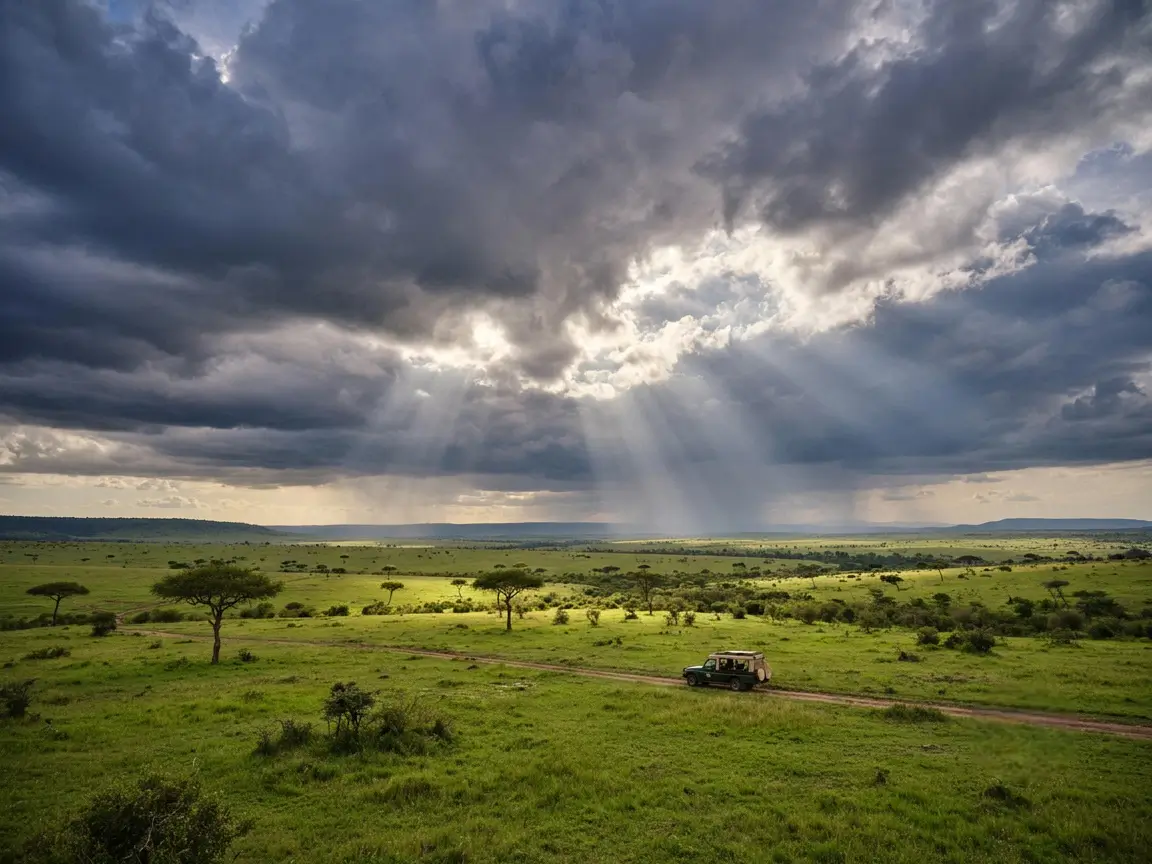
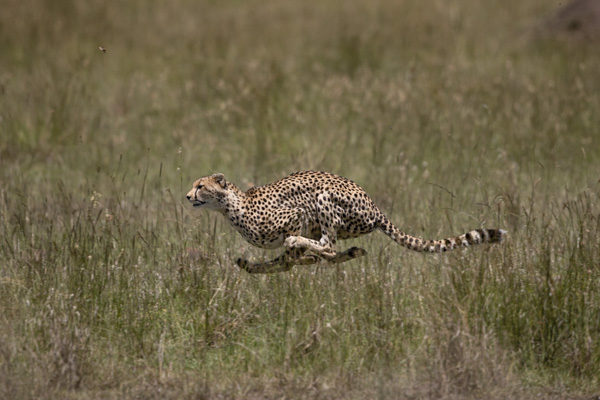
February and March sit in the middle and deserve more credit. Most births happen then, so you get newborns and the predators who've noticed them. Birdwatchers do well in the wet months as well, once migrants arrive from Europe and Asia. If your idea of the best safari in Kenya is a quiet one, with a couple of vehicles at a sighting instead of a queue, the best time to visit Masai Mara might be a month most people skip.
Matching the month to Masai Mara safari packages
For crossings with fewer vehicles, look at late September or October. For big cats and clean light, January to early March. For lower prices and dramatic skies, April, May or November.
Then compare Masai Mara safari packages on how many nights you spend inside the reserve and how many people share a vehicle, not just the headline price. Our Great Migration Odyssey runs four nights and is timed around the river crossings, with the stay at Mara Siligi, our own camp inside the reserve. Before you pay a deposit, check the FCDO's Kenya travel advice for entry and health requirements.
The short version
Go in September for the migration with fewer crowds, January to March for big cats and calves, and April, May or November for quiet and lower prices. The best time to visit Masai Mara is whichever month matches what you want to see. That's a less satisfying answer than "August" and a more useful one.
Tell us your dates and group size, and we'll match them to one of our Kenya Masai Mara safari packages, and tell you honestly if your dates are worth moving. Call +254 742 801 843 for a free quote.
Find the Best Time to Visit Masai Mara for Your Dates
Tell us your dates and group size and we'll match them to a safari package, and tell you honestly if your dates are worth moving.
Get Your Free Quote Call +254 742 801 843Ask Frame The Wild Moments for a free quote, or reach us at [email protected] / +254 742 801 843.