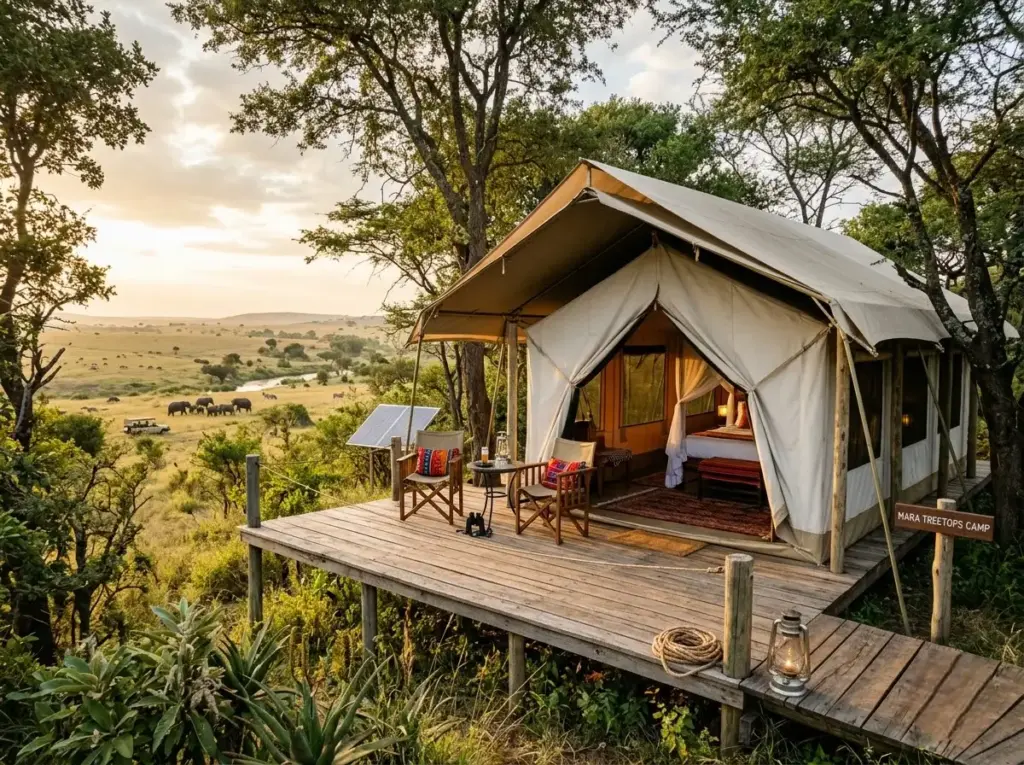
Every page selling Masai Mara National Reserve tours shows the same glossy accommodation photos, and it’s genuinely hard to tell from a picture whether you’re looking at a hotel with a safari theme or an actual tented camp. The difference matters more than most first-timers expect, and it’s worth understanding before you book either one.
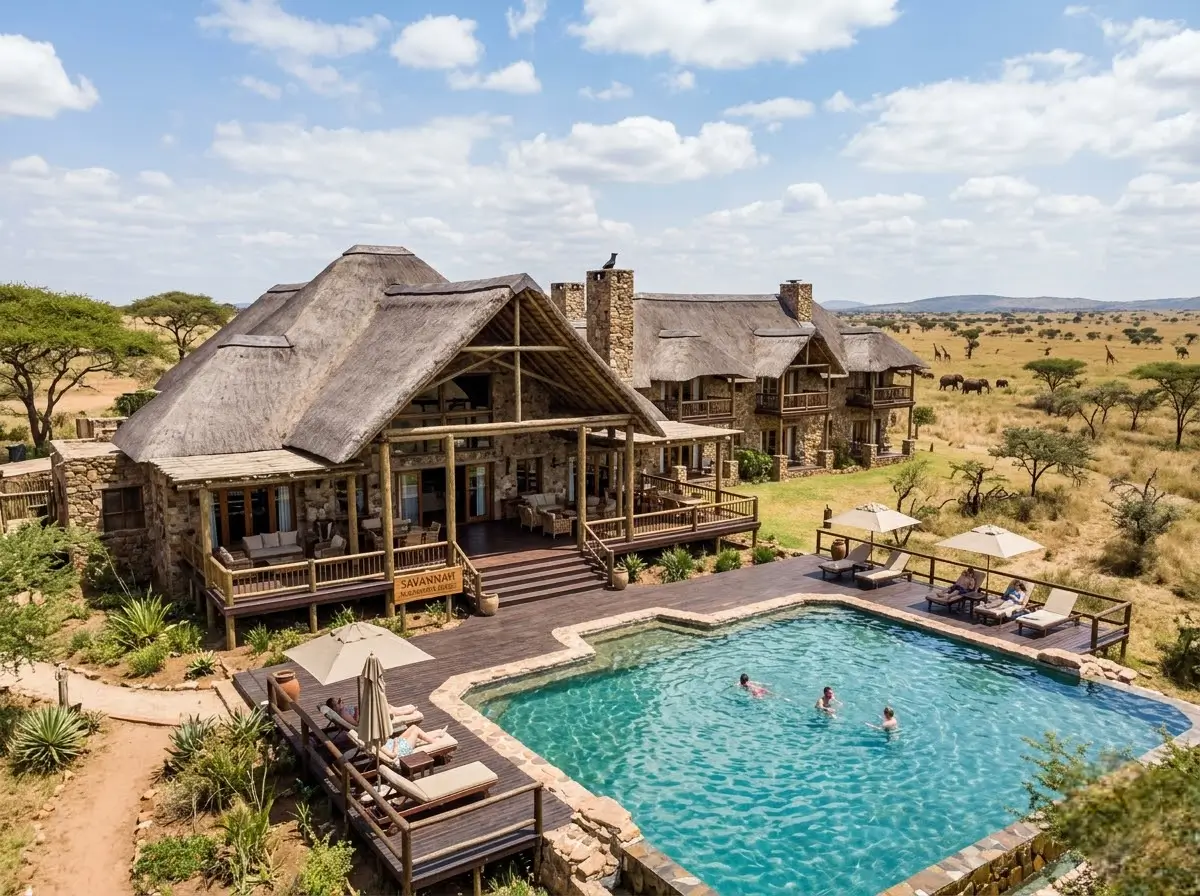
Safari lodge: the “boutique hotel in the bush”
A safari lodge is built from permanent materials — stone, wood, and brick, with solid walls and glass windows. Lodges tend to be larger, often with 30 to 80+ rooms connected by paved walkways, and are more likely to include hotel-style amenities: large swimming pools, fitness centres, multiple dining halls. The overall feel is more secure and insulated from the sounds of the night, which suits travellers who’d rather have a traditional building than sleep under canvas.
Tented camp: not what “tent” usually implies
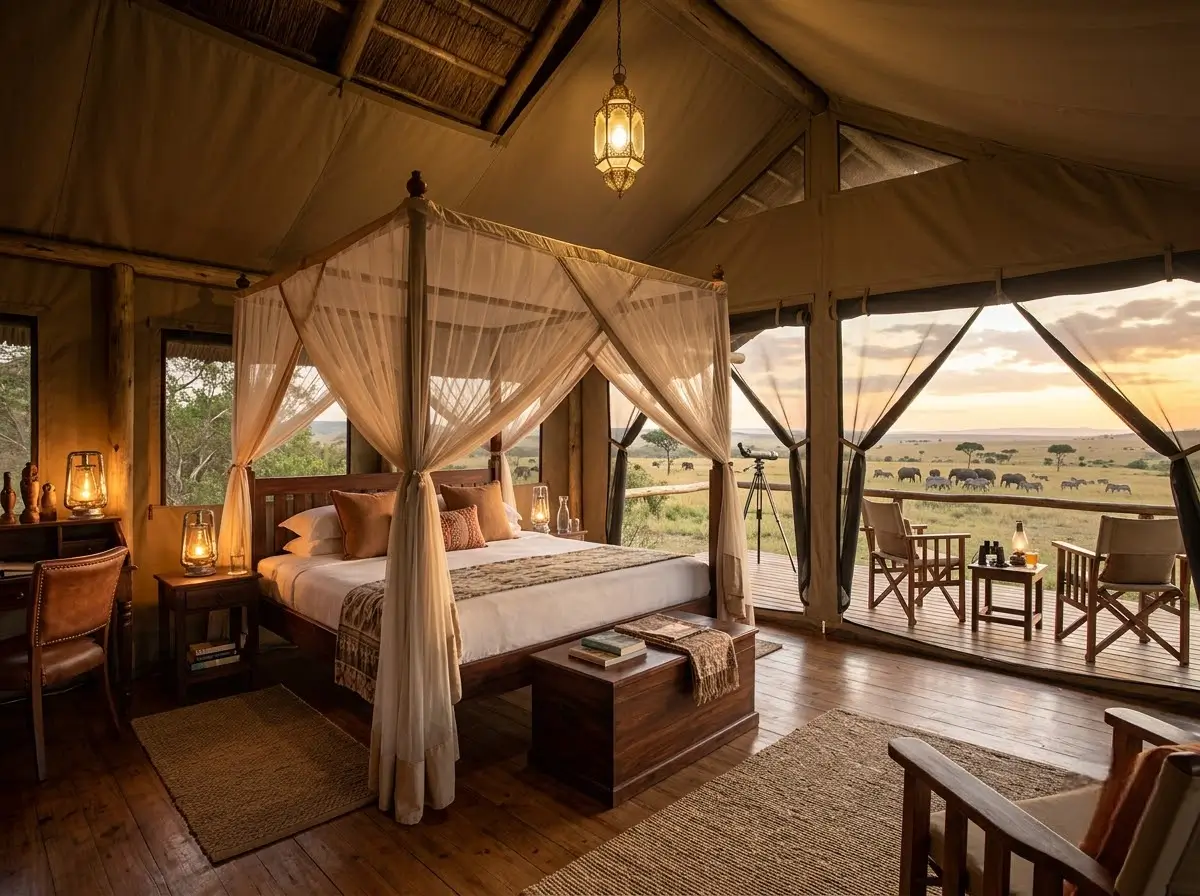
A safari tented camp is not the tent you’re picturing. These are high-quality canvas-walled suites on a permanent wooden or stone base, with real doors, en-suite bathrooms with flushing toilets, and proper beds — closer to “glamping” than camping. Camps are typically smaller and more intimate, usually hosting only 6 to 12 tents, with amenities focused on quiet luxury rather than large-scale hotel features. The trade-off is the experience itself: you can hear lions roar and wind move through the trees through the canvas walls, which is precisely the “maximum immersion” appeal for travellers who want the classic safari feel rather than a buffer from it.
Side-by-side comparison
| Feature | Safari Lodge | Tented Camp |
|---|---|---|
| Construction | Stone, wood, brick — solid walls | Canvas walls on a wooden/stone base |
| Typical size | 30–80+ rooms | 6–12 tents |
| Amenities | Pools, fitness centres, multiple dining halls | Private veranda, quiet-luxury focus |
| Atmosphere | Secure, insulated from bush sounds | Immersive — you hear the bush at night |
| Best suited to | Travellers preferring traditional buildings | Travellers wanting the classic “sleep under canvas” safari experience |
Neither option means sacrificing comfort
It’s worth being clear that neither format means roughing it. Both are safari-industry standard, and choosing a tented camp over a lodge is a preference about atmosphere, not a downgrade in comfort. Mara Siligi Camp, for instance, is positioned as an eco-friendly, boutique tented camp inside the reserve itself — designed specifically for the immersive side of this comparison, with solar power and charging points available in the main lounge area.
Wi-Fi and staying connected either way
Neither format guarantees strong connectivity, though most lodges and camps offer Wi-Fi in shared lounge areas. Once you’re out in the deep bush, don’t expect a signal regardless of which you’ve booked — if constant data matters to you, a local eSIM bought on arrival is a more reliable plan than relying on camp Wi-Fi during game drives.
What about air conditioning?
Neither lodges nor tented camps in the Mara typically run traditional air conditioning, and most guests don’t miss it. Rooms are designed to be open to the elements — high thatched roofs and mesh walls let the savannah breeze move through — and because the reserve sits at a high altitude, the air stays cool even when it’s sunny at noon. Safari vehicles work the same way: open-sided with pop-up roofs, trading air conditioning for a genuine 360-degree connection to the landscape and better wildlife visibility.
Frequently Asked Questions
Is a tented camp less comfortable than a lodge?
No — a proper safari tented camp includes en-suite bathrooms, real beds, and private verandas. The difference is atmosphere and scale, not comfort level.
Which is better for a first-time Masai Mara visit?
Either works well. A lodge suits travellers who want a more traditional hotel feel; a tented camp suits those who want the immersive, “hear the bush at night” experience most people associate with a classic safari.
Do tented camps have electricity?
Most run on solar power, typically with charging points concentrated in the main lounge rather than individual tents — worth bringing a portable power bank as backup.
Are Masai Mara safari vehicles air-conditioned?
No, by design — open sides and pop-up roofs give better wildlife visibility and a constant natural breeze, and game drives are timed for the cooler parts of the day anyway.
Choosing Where to Stay on Your Masai Mara National Reserve Tour?
Tell us which side of this comparison sounds like you, and we’ll match you to the right stay at Mara Siligi Camp — our own property, run by us, not booked through someone else’s listing.