There’s a unique magic to a bush breakfast. The morning air is crisp, the coffee tastes richer, and the wild canopy hums with early life. We often scan the horizon for big game—elephants moving through the acacia or a leopard resting in a tree branch—but on a recent morning walk, a completely different world caught my eye.
Morning Light in the Masai Mara
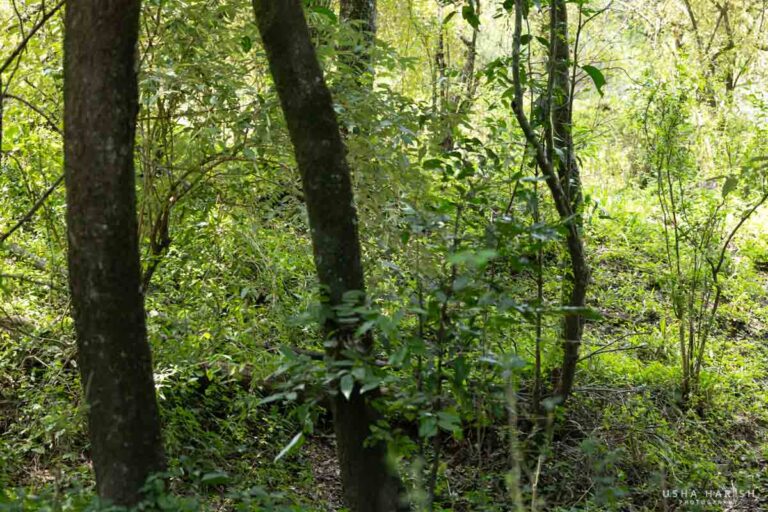
Walking through the sunlit woods, everything looked like ordinary green trees at first—the web was completely hidden. This has always been my favorite spot for a bush breakfast in the Masai Mara, but on this morning, nature offered a brand new surprise. As the morning light hit the clearing at just the right angle, a huge, see-through spider web suddenly lit up in the sun.
A Jewel in the Canopy
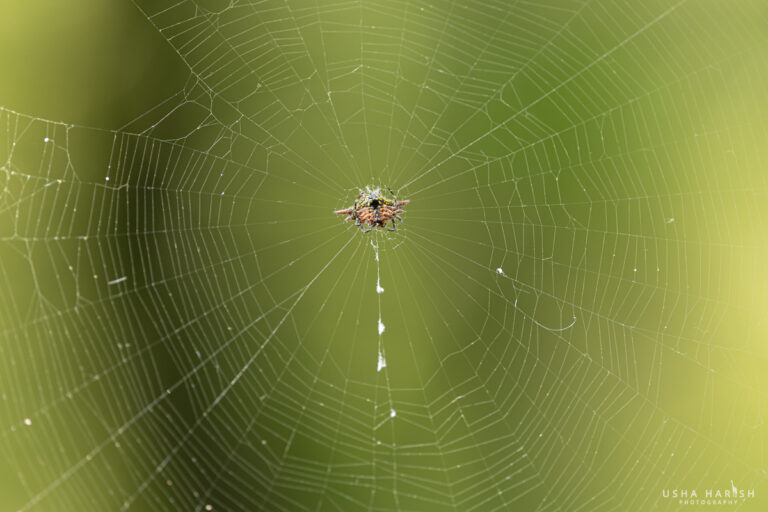
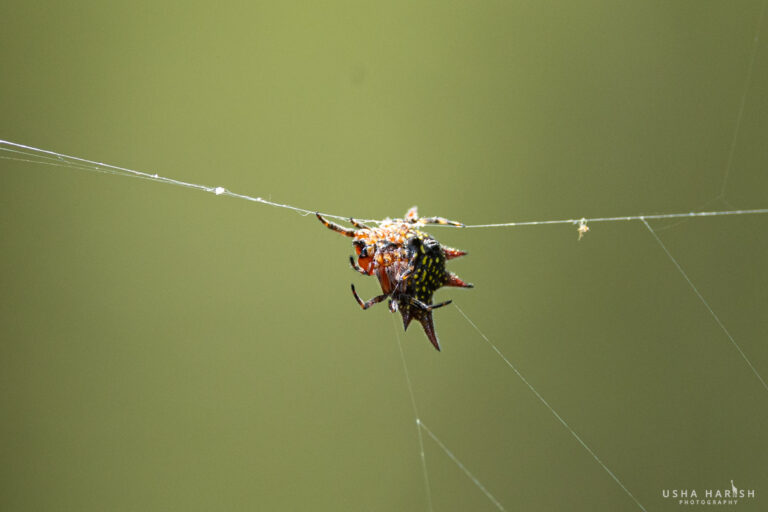
Suspended right in the center sat a breathtaking, jewel-like creature: a Spiny Orb-weaver (Gasteracantha), complete with vivid yellow markings, sharp dark horns, and intricate red accents along its crown.
To the naked eye, it looks like a delicate piece of floating art. In reality, it’s a marvel of natural engineering:
- High-Tensile Architecture: Spider silk is weight-for-weight stronger than steel and far more elastic, capable of absorbing the impact of flying prey without snapping.
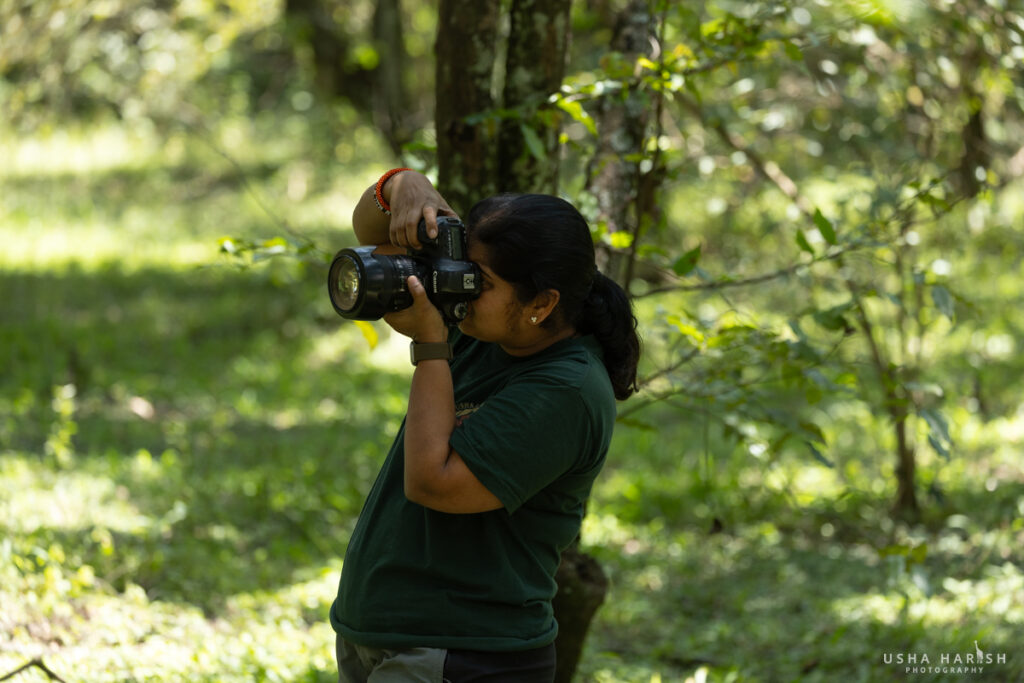
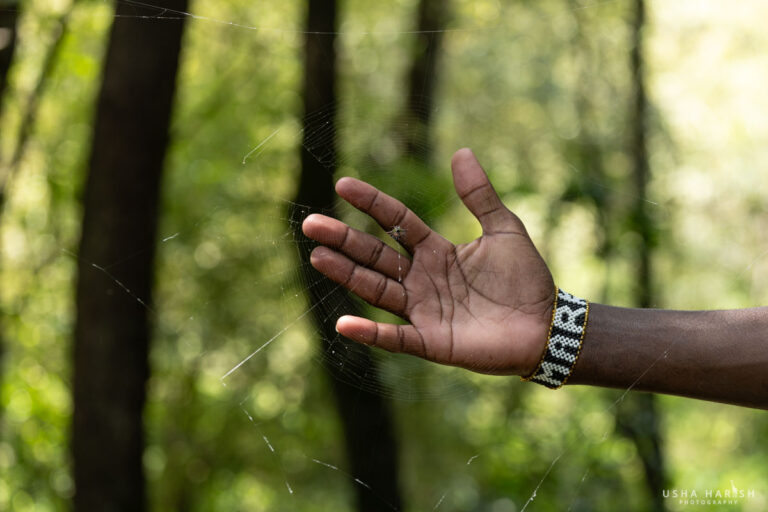
- The “Hand Trick”: Focusing a camera lens on thin silk suspended in mid-air is notoriously difficult. Camera autofocus systems rely on contrast and texture; when targeting near-transparent thread against a busy, out-of-focus background, the lens simply “hunts” endlessly. Placing a hand behind the web gives the autofocus sensor a solid surface to lock onto, allowing you to lock focus and capture the intricate details of both the silk and its tiny architect.
Beyond its jewel-like shell, I was mesmerized watching it move. Despite the web looking so fragile and transparent, the spider darted across the delicate, sticky grid with astonishing speed and precision—navigating its hand-spun highway as if gravity didn’t apply.
How to Capture the Invisible
Photography Tips for Shooting Spider Webs
If you run into another transparent web in the field, these techniques will help you lock focus every time:
- Switch to Single-Point AF or Manual Focus: Multi-point autofocus will almost always grab the background leaves instead of the thin silk. Use single-point AF directly on the spider’s body, or switch to manual focus with Focus Peaking enabled.
- Use the Hand/Object Anchor: Just like in the frame above, place a solid surface (a hand, a notebook, or a dark leaf) directly behind the plane of the web at the same distance, lock focus, remove the object, and take the shot.
- Position for Backlighting or Side-Lighting: Webs are practically invisible when lit from the front. Position yourself so the light source (like early morning sun) comes from behind or the side of the web to make the silk strands glow against a darker background.
- Increase Depth of Field: Micro-subjects require a slightly tighter aperture (e.g., f/8 to f/11) to ensure both the spider’s body and the surrounding spiral silk stay within the focal plane.
Whispers in the Wild
It struck me how often we walk past the grandest masterpieces simply because we aren’t looking closely enough.
Nature rarely shouts to get our attention; it whispers.
When you slow down, quiet your mind, and truly look for beauty, the world opens up in extraordinary ways. A single, delicate thread of silk becomes a testament to how intricate, thoughtful, and deeply connected this world really is.
Creation doesn’t just exist in the massive landscapes; it lives also in the tiny, transparent webs shimmering in the morning sun.
Usha Harish